Spotlight Series:
Medical Students of Cleveland
I started this project during my third year of medical school after sitting down with a classmate whom I considered an acquaintance at the time. He told me about his background, and I was struck by the amount of life he had lived through. More than that, I was surprised that I had known him for years without knowing almost any of his story.
That conversation became the idea for Medical Students of Cleveland, (based loosely on Humans of New York). The premise was inspired by a new curiosity in knowing the people around me better. I wanted to give them the time and space to tell me who they were outside of the few pieces of themselves that had surfaced in passing, and then try to capture some part of that person through my photography.
I sat with each person for hours. We talked of family, immigration, queerness, religion, grief, mental health, medicine, childhood, ambition, and the people who shaped them. I laughed with some of these people and simply cried with others. Afterward, we would spend another hour taking photographs together, trying to create something that felt as individual as the conversation we had just shared.
The photos were, personally, my favorite part. Each portrait was a collaboration. Some people immediately knew exactly how they wanted to be photographed; others allowed me to lead them. My goal was to allow everyone true recognition of themselves in their photos. As a caveat, I must add, none of these people are models. Most of them have minimal experience in front of a camera lens. However, I was shocked at how quickly everyone let their shyness fall away while we took photos together. I wonder if our conversations prior helped erode the discomfort that is so, so intrinsic to being the subject of a photo.
Below is a collection of stories from future and current physicians who completed (or will complete) their medical education in Cleveland, Ohio. There are themes that appear again and again: queer identities, lives shaped by immigration, complicated relationships with family and culture, staying true to oneself, and emphasis on the importance of community. Some of the people in these pages were already friends of mine. Some were strangers I had never met before.
I tried my best to distill hours worth of conversations into a few bites of text. I wish you (the reader) could have sat with me while I talked to these wonderful people, but I suppose this is the next best thing. This project, although short, took me a year to complete and I am beyond ecstatic that it’s ready for others to read.
I hope you enjoy!!
Khyrul
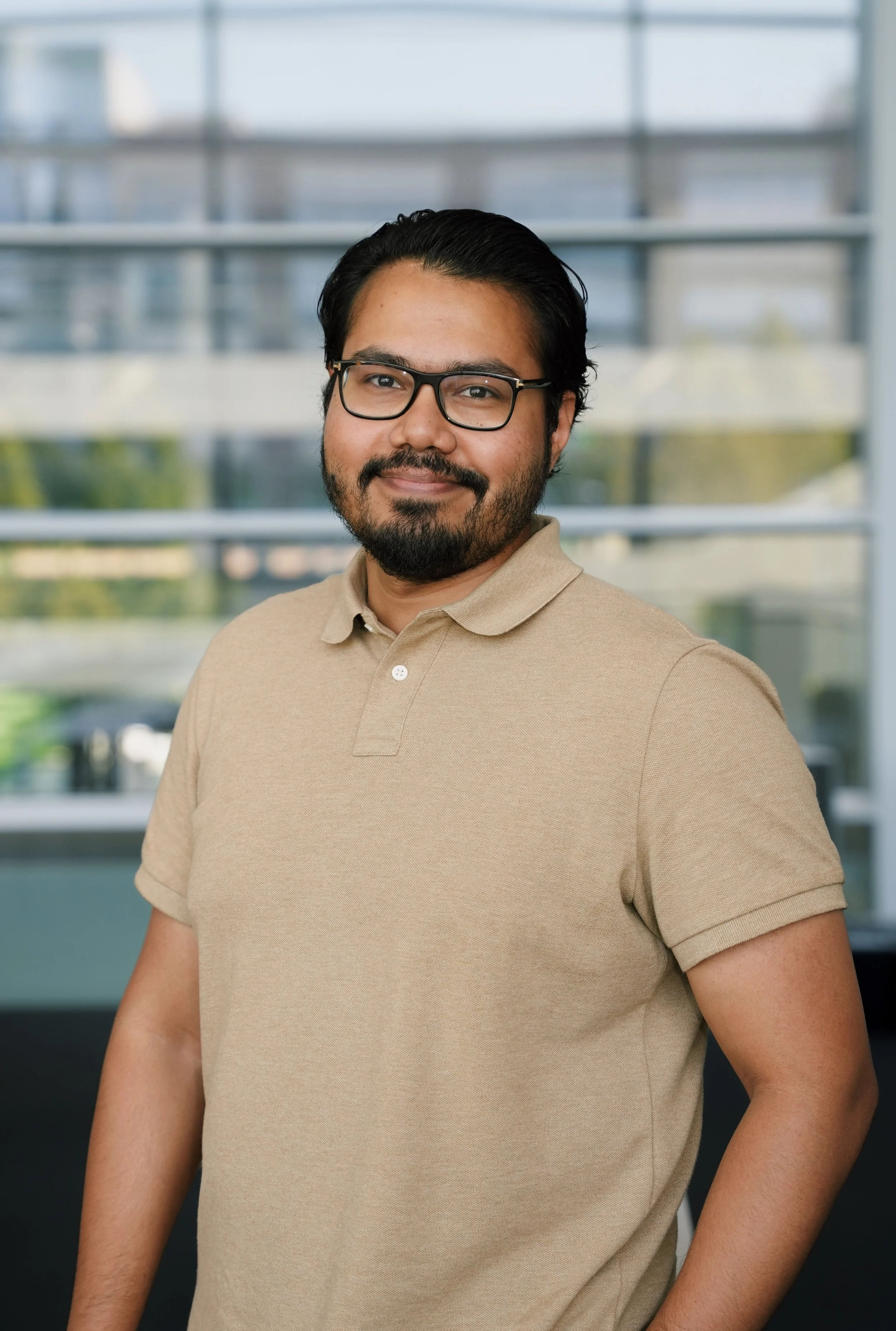
Khyrul grew up in Bangladesh and came to the United States for college in 2015. Medicine had always been somewhere in the background, but there was no single moment when he decided to become a doctor. Biology interested him, and volunteering at a clinic in college eventually helped him connect the science he was learning with the people he could use it to help.
Moving to the United States was a much larger adjustment. Khyrul grew up in a culture where family and community were built into everyday life. Coming here meant starting from scratch, without the network that had surrounded him at home. Although he gave much of that up, he was driven by a desire to create more opportunity for himself and his family.
Being an international student also meant experiencing what it felt like to stand out for the first time. Bangladesh had been relatively homogenous; in the United States, Khyrul was exposed to people of different races, religions, sexual orientations, and gender identities on a daily basis. Looking back, he believes those relationships changed the way he understood the world and made him more conscious of how strongly environments shape one’s perspective.
It also changed his relationship with community. In Bangladesh, community had largely existed without him having to create it. In the United States, friendship and belonging required more intention. Over time, he built a life of his own here while remaining connected to a family living thousands of miles away.
Around the beginning of medical school, Khyrul’s father died. His father had grown up with limited expectations but pushed himself beyond them and wanted his children to go even further. His death made Khyrul more conscious of time and more intentional about what he wanted to do with the opportunities he had been given. Khyrul’s philosophy in life became less about reaching the next checkpoint and more about considering where he came from and who he could help along the way.
Distance from home remains complicated. Khyrul would like to see his mother more often, and she would like to see him too, but he describes this period as the “building part” of his life. There is comfort in knowing that she understands why he is here and supports what he is trying to build. That perspective has also changed the way Khyrul thinks about life outside of medicine. Food, travel, family, friendships, and curiosity all matter to him. Life built around those milestones matters too.
Q: What would you tell someone who feels like they don’t belong?
A: “Don’t box yourself in. Don’t tell yourself that you don’t belong, because if you start believing it, then it’s going to be a hard uphill battle for you. Surround yourself with people that allow you to be confident, to believe in your dreams, and just fake it till you make it. You have to have faith in yourself and in the process a little bit. Sometimes it takes longer, sometimes it doesn’t. Sometimes it’s hard, sometimes it’s easy, but it’ll work out in the end.”
Q: What is important to you outside of medicine?
A: “Medicine is a huge part of what I want to be and what I want to do with all my life, but there are other aspects that I also wanna explore. Food is a big part of it, traveling is a big part of it, spending time with people I care about is a big part of it. Having that sense of curiosity and adventure and doing new things for just me and my soul, I think is very important too.”
Q: What do you hope to pass on to the people who come after you?
A: “Pay it back. That’s one of the things that I naturally feel inclined to do because I’ve been helped by so many people, not just by my family, not just by my friends. When I’ve been unsure and I’ve reached out to people, most of the time they’ve said, ‘Yeah, I can help you out,’ or, ‘Let’s talk.’ Professors in and outside of medicine, mentors of different ages. That’s something that I really strongly believe in. I think that’s how you build a community.”
Q: What have your parents taught you?
A: “Without them even trying, I think they taught me those things about valuing other people’s opinions and giving them a listen. Be nice to people. Be nice and be kind, and do your best to get to know people. Those are the principles they taught me.”
Patrick
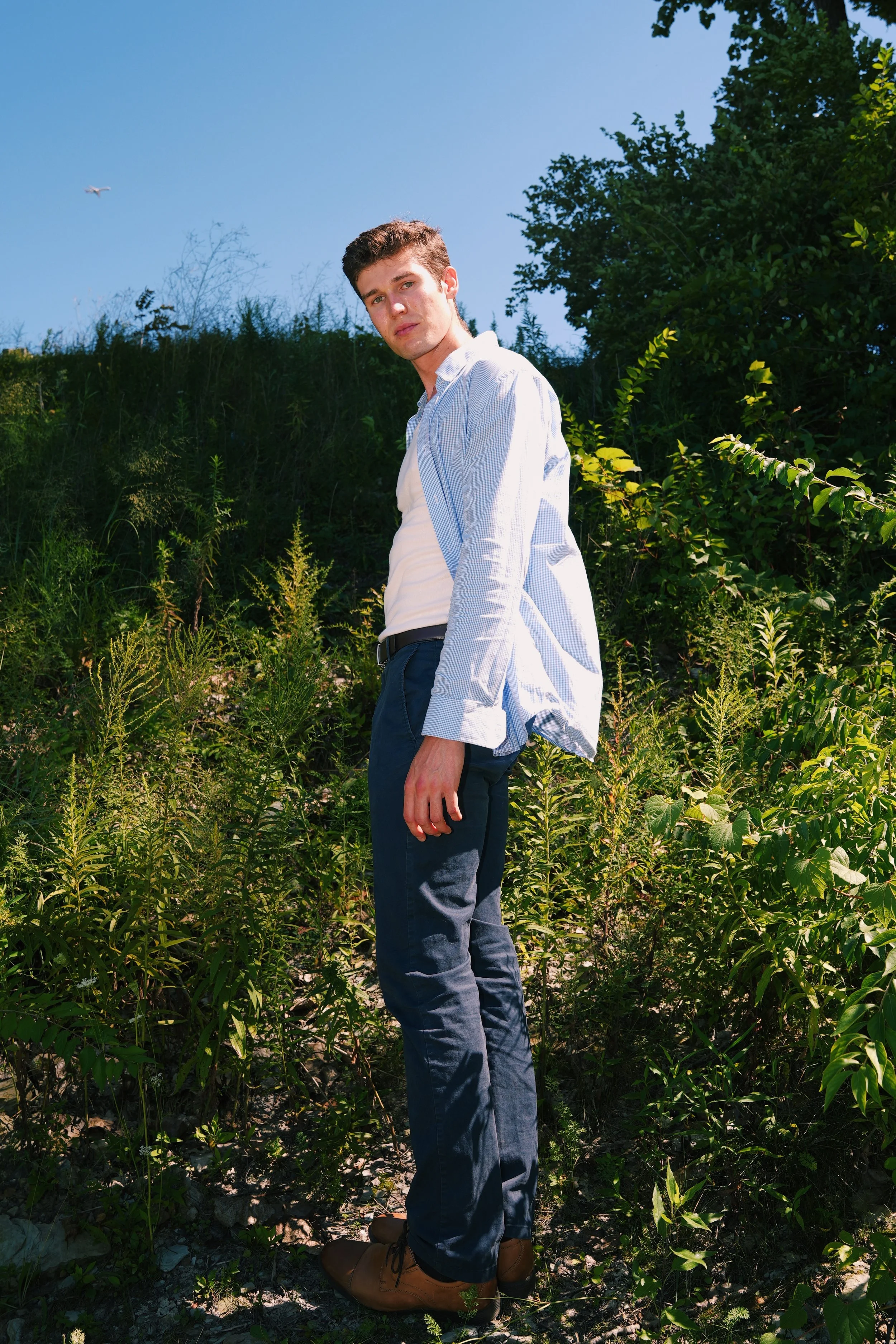
Patrick grew up in the Cleveland suburbs, attended college in Michigan, and eventually returned home for medical school. Science had interested him from childhood; he remembers doing small experiments long before he knew what kind of career he wanted. Medicine eventually felt like the natural fit, as it gave him something other scientific careers did not: sustained interaction with other people.
Patrick came out to his family at 21. Growing up Catholic, he was unsure exactly how being gay would be received, even though he believed his parents would ultimately love him regardless. Rather than having a single coming out moment, he gradually told friends, his sister, his parents, and eventually his extended family. With time, he became more confident and comfortable living openly.
Some of the most difficult conversations came after he had already come out. His parents once confronted him out of fear that being gay meant that one is likely to die of AIDS. Patrick was hurt by the interaction, but he later began to understand where that fear came from. His mother had grown up during an era shaped by the AIDS crisis and had known relatively few openly gay adults living happy, visible lives.
An entire generation of potential role models had been lost to illness, addiction, stigma, the closet, or migration to places where queer people could live more openly. Patrick states that stigma around sexuality evolved significantly due to the work of the queer people who came before us. That fortunately meant that growing up gay in the modern age looks very different compared to 30 years ago. He notes that his coming out journey was full of women who became his protectors throughout his life.
As he got older, queer mentors and friends helped him imagine adulthood more expansively. He began to see being gay not simply as something that complicated his relationship with society’s expectations, but also as something that gave him freedom from some of those expectations.
Those experiences have affected how Patrick approaches medicine. Spending years monitoring how he presented himself to other people made him especially aware of vulnerability, discomfort, and the gap between what someone may know internally and what they are ready to say aloud. He recognizes something familiar in patients who are frightened, in denial, or not yet able to fully confront what is happening to them.
As Patrick moves through training, one of his priorities is not allowing medicine to dictate the kind of person he becomes. He does not believe a specialty, career, or age should require someone to fit a particular personality or archetype. A surgeon can be warm. A physician can laugh at himself. Growing older does not have to mean becoming unrecognizable to the person you were before.
Q: What makes the difficult parts of medical training feel worthwhile?
A: “Whatever you do in life, you have to work really hard. There really isn’t an easy way out, no matter what you do. The one thing that I appreciate about medicine is that when you work long hours, there are always other people that you’re working long hours for. You come in early to see your patients. You stay late to take care of your patients or follow up on a lab. I think that’s what makes medicine special.”
Q: What have you learned about time?
A: “Time does really heal everything. People take time to come to their terms. There is a really powerful relationship between time, healing, medicine, and relationships. Anything over time will always give you more information.”
Q: Do current politics make you worried about the future?
A: “I’ve thought about that and been concerned, but now I’m not so concerned. If you want to talk specifically about LGBTQ stuff, people have fought through that once before. Just knowing that there’s a history and people have done it before gives me a lot of confidence and optimism that we can all rise to the occasion.”
Q: What would you say to a younger gay kid who is scared?
A: “Things will get better. You just have to keep dreaming and prioritize being happy.”
Favour
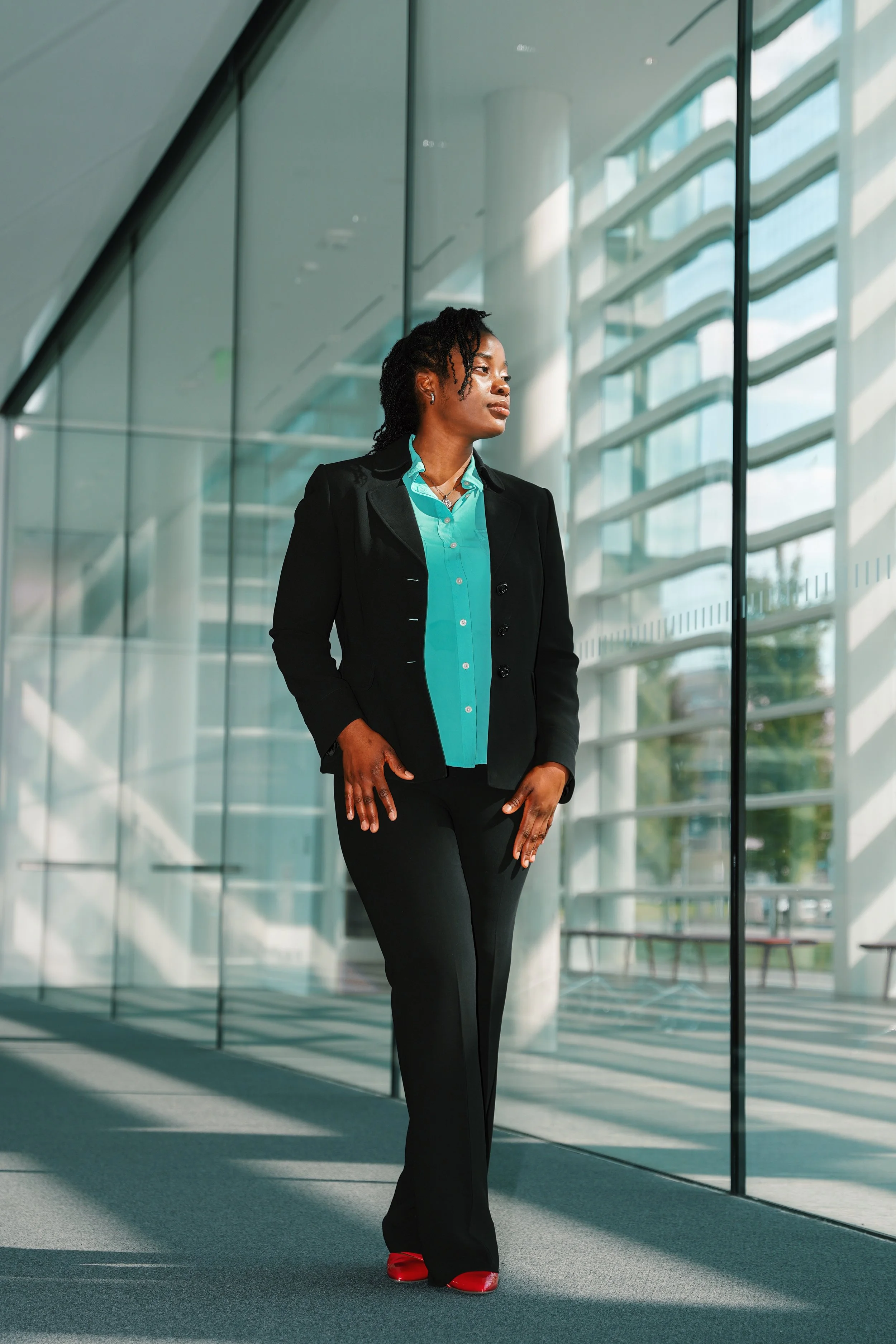
Favour Chinenyeoma Chukwuma was born in Enugu, Nigeria, and is the middle of five sisters. Her family moved several times throughout Nigeria before settling back in Enugu when she was around ten. Much of her childhood was spent with her sisters at home, watching movies, cooking, arguing, and growing up together. She jokes that being the middle of five gave her “hyper middle child syndrome.”
Her interest in medicine began partly with a story she heard throughout childhood. Before Favour was born, her grandfather died following a snakebite. Traditional healers in his village treated him without knowing that he had diabetes. After his death, however, they remembered what had happened and used what they learned to care for future patients. Favour began thinking of healers not only as people with medical knowledge, but as people entrusted with the stories and experiences of their communities.
Years later, while visiting her infant sister in New York, Favour watched a pediatrician quickly identify an ear infection after her family had struggled to understand why the baby was sick. What might have been an ordinary appointment reinforced something she had already begun to believe: medicine involved learning how to interpret the story a person’s body was telling and knowing what to do with that information.
Her own road to medical school was far less straightforward. Favour began a special master’s program at Georgetown virtually from Nigeria while waiting for her visa, then moved to the United States in January 2022. She completed the program, worked in neurology, volunteered with street medicine in Pittsburgh, helped her family through their own relocation, and even completed a farm internship in Georgia before eventually arriving in Cleveland for medical school.
Her Igbo background also influences the way she thinks. She grew up speaking three languages, and she describes Igbo as a language in which a word can hold several meanings depending on context. That habit of considering more than one interpretation has carried into the way she approaches people and medicine. An initial explanation may be correct, but she has learned not to assume it is the only one.
Immigration also made Favour more conscious of the kindness people extend to one another. Community had felt expected growing up in Nigeria because the people around her shared language, history, and culture. In the United States, she was struck by people who helped her despite having no obvious reason to do so. Those experiences have made her think more intentionally about how she treats the people she encounters, even when the interaction is brief.
Despite everything it took to get here, Favour does not want ambition to make her less curious or less open to the world around her. She remains interested in a wide range of specialties and is comfortable not knowing exactly where she will land yet. For now, she is trying to preserve the curiosity that brought her this far.
Q: What from your Igbo background do you think you bring into medicine?
A: “The language itself, just how it’s built, allows you to think of the world in so many ways. One thing can have so many meanings. When you hear something, you don’t always jump to conclusions. You think, okay, there could be a different explanation for this. I think that’s one of the biggest strengths my culture has imbibed in me so far: to keep an open mind and understand that there are different explanations for things sometimes.”
Q: What has immigrating taught you about other people?
A: “Experiencing that kindness for myself in different places was an eye-opener for me, and it’s still something that brings me to tears sometimes. It teaches me to be that person for people as well. How can I make someone else’s life better whenever I can? Whenever I can stop and interact with a person, how can I make the most of that interaction?”
Q: What would you tell your younger self?
A: “The world eventually works itself out. My younger self was so ambitious. She had so many dreams and so many goals, and she was always stressing. Her work ethic is what brought me here, so she should keep on keeping on with that. But everything else will work out. There’s no need to feel anxious or stressed or worry about things that we don’t have any control over. Take charge of the things that you can take charge of and just leave the rest and hope for the best.”
Q: If you could have one superpower, what would it be?
A: “To be able to see things with the eyes of a child whenever I can. When I first moved to Cleveland, I had a different view. Now, it’s familiar. I would like sometimes to be able to have that new sight again. Just the honesty that comes with a child’s view would be nice.”
Minneh
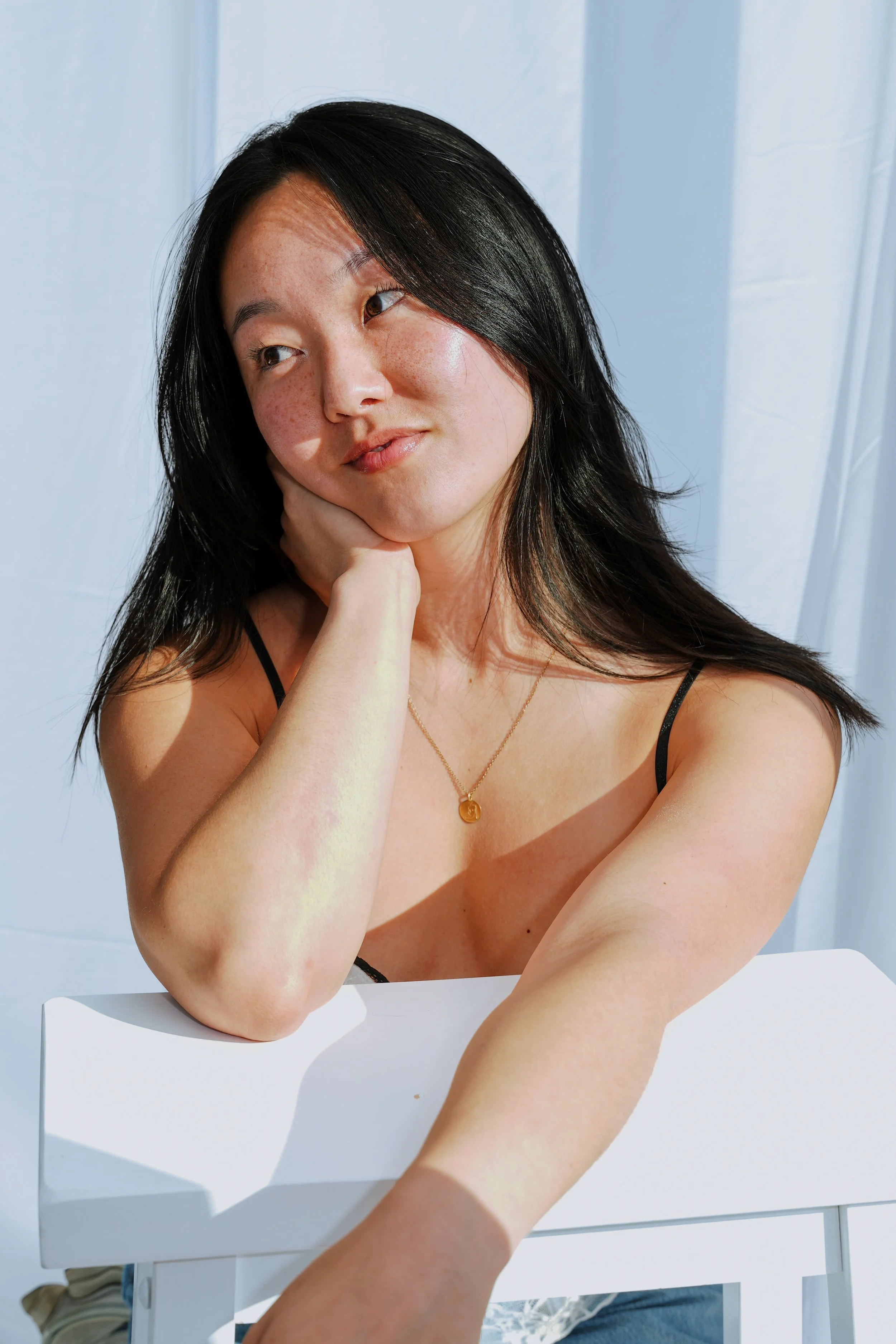
Minneh grew up in Minnesota in a Korean immigrant family and a deeply Christian Korean community. Her path toward medicine began in middle school, when she experienced severe depression without understanding what she was going through. Mental health was rarely discussed at home, and only years later did she realize that getting help sooner might have changed those years for her.
That realization pushed Minneh toward helping other people struggling with their mental health. She volunteered with the Crisis Text Line for years and discovered psychology through a college course, initially imagining that psychiatry might be her future. As she grew older, mental health also became easier to discuss within her own family. She eventually learned that her mother had experienced depression as well, opening conversations that had never happened when Minneh was younger.
During two gap years in Washington, DC, Minneh worked with autistic transgender adolescents. The experience introduced her to a patient population she loved working with while also exposing her to the additional stigma and barriers transgender people could face in healthcare. By the time she entered medical school, advocacy for queer and transgender patients had become central to the kind of physician she imagined becoming.
Minneh’s own queer identity developed more gradually. She grew up in a religious environment where openly queer adults were largely absent, and her younger sister recognized that part of Minneh before Minneh fully recognized it herself. College gave her access to queer friends and communities that helped her better understand herself. For the first time, queerness became something ordinary rather than theoretical.
Her younger sister has remained one of the most important people in that process. She is also queer, more gender-fluid, and comfortable living in ways Minneh did not always feel able to. Even though Minneh is the older sibling, she sees her sister as someone who has paved the way for her in certain parts of life.
Medical school then changed Minneh’s plans again. Anatomy showed her how much she enjoyed working with her hands, leading her to consider gender-affirming urology rather than psychiatry. The specialty may have changed, but the population she wants to serve has not.
Whatever path she ultimately takes, Minneh hopes her work extends beyond individual patient encounters. She is interested in changing how healthcare systems and physicians approach transgender patients while still building the kind of relationships that make someone feel safe enough to return for care.
Q: How has your sister influenced you?
A: “She’s just kind of very woke, even more so than me. I feel like I learn from her in a lot of ways.”
Q: How has religion affected the way you understand yourself?
A: “I’m really glad that I did grow up with some of the religious values. However, I feel like I would’ve come to terms with my identity so much sooner if I hadn’t grown up religious.”
Q: What kind of impact do you want to have in medicine?
A: “I’d like to do something a bit more structural, like policy wise, or be able to shape other physicians’ views in a way that’s more welcoming of [transgender people]. And then, of course, have strong and trusting relationships with my [transgender] patients, especially because they’ve probably been through so much in the medical system. I want to be their safe space.”
Q: What would you want a younger queer Asian person to know?
A: “I feel like it gets better. I never thought that I would actually live to be this old, to be honest. For so many years of my life I remember thinking, ‘This would be so much easier if I wasn’t alive.’ Finally I’ve reached a point where I genuinely enjoy life and I’m really happy that I am alive. There’s way more to do. So I think that it gets better.”
Nick
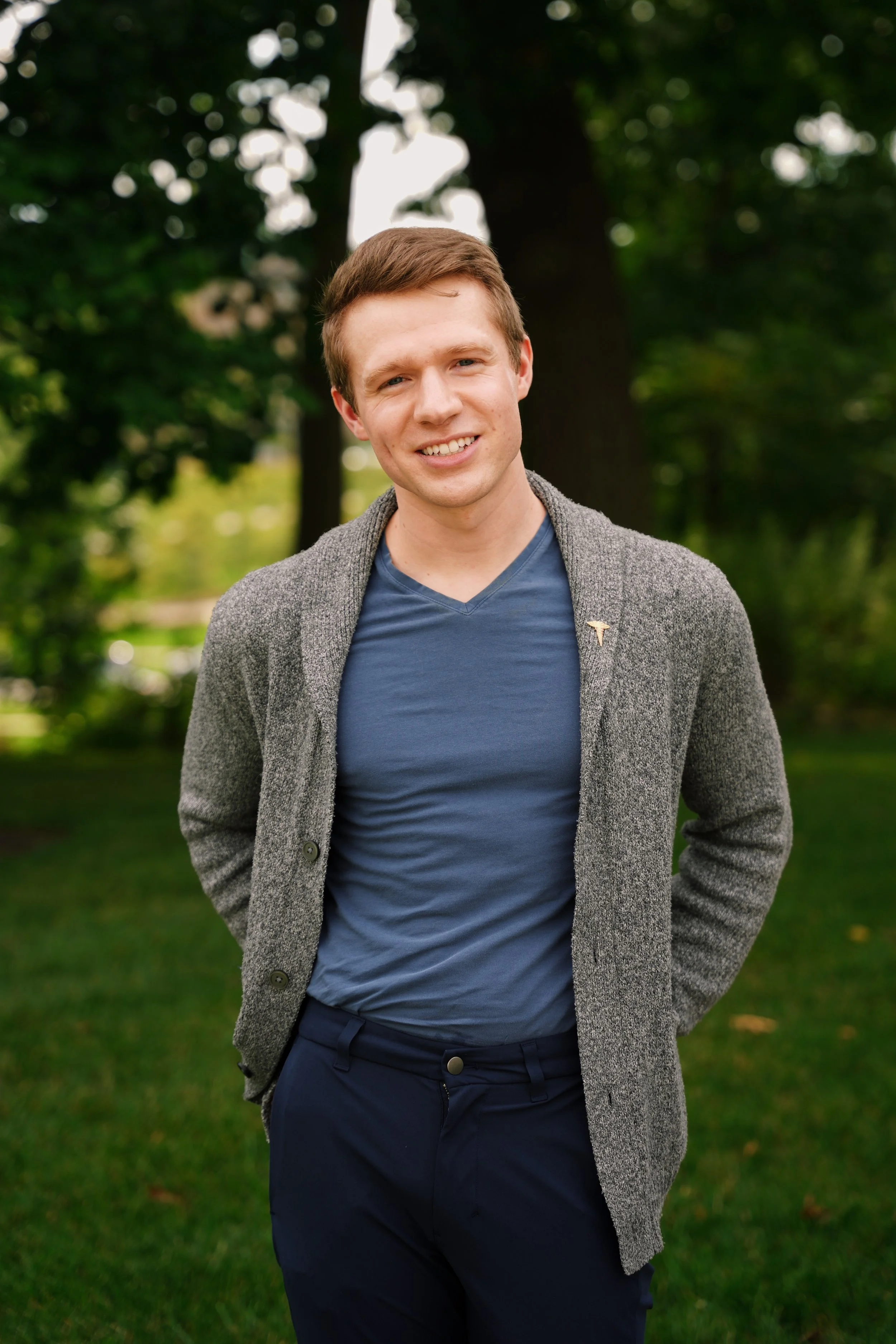
Nick is from Xenia, Ohio, but many of his earliest memories come from a hospital. He was diagnosed with leukemia at three and a half and spent much of early childhood surrounded by adults and healthcare professionals rather than children his own age. He believes the experience made him grow up quickly; life, death, illness, and medicine entered his world before he was old enough to fully understand them.
The effects lasted well beyond treatment. As a teenager, Nick was diagnosed with PTSD related to his childhood illness. One of his earliest memories is having an anaphylactic reaction to IVIG when he was four—an event his mother was surprised he could still remember clearly years later. Growing up around adults also contributed to a feeling that he had always been slightly older than his age.
Medicine therefore entered Nick’s life much earlier than it does for most people. He joined NEOMED through its BS/MD program and later added a PhD after realizing how much he enjoyed research. Still, his path was not completely certain. During the early years of medical school, he became disillusioned enough to wonder whether he wanted to practice medicine at all.
Returning to clinical rotations after several years of research changed that. Nick entered a class in which many of the people he had originally started medical school with had already graduated, and returning to patient care felt intimidating. Instead, it became the part of his training that reconnected him to why he had entered medicine in the first place.
Some of his strongest relationships were with patients with cancer. With one patient with lymphoma, Nick disclosed his own history as a childhood cancer survivor. They spent close to an hour talking and crying together. The encounter made him realize that the experiences he carried into medicine were not separate from his professional role; sometimes they were exactly what allowed a patient to feel understood.
Nick ultimately chose pathology, a field with fewer direct patient encounters, but that realization has stayed with him. So has the importance of visibility. He served in leadership with the Medical Student Pride Alliance during its early development, helping organize queer representation across medical schools and mentor students who would take over after him. Friends from home have told him that simply seeing someone openly queer in medicine has mattered.
After years spent moving through medicine and research, Nick has become increasingly interested in authenticity rather than trying to fit a particular professional mold. He writes poetry, loves music, and describes himself as more anxious and introverted than he might otherwise be. Increasingly, he is learning that being himself is enough.
Q: What have you learned about being yourself in medicine?
A: “I don’t know if anybody actually told me this. I’ve just kind of learned it throughout: don’t take yourself so seriously. At the end of the day, we’re people. I’m not going to be the smartest at any place. We’re all brilliant. I’m not gonna be the best at one thing, but I’m me, and that’s enough. Really lean into yourself and don’t take yourself too seriously.”
Q: Why has being openly queer in medicine mattered to you?
A: “Some people have mentioned, like friends growing up, how important it is that I’m vocal about being queer and in medicine. They’re not in the sciences or anything, but they see the impact. It’s very reassuring and nice to hear.”
Q: What do you do outside of medicine?
A: “I have a little Shih Tzu. She’s a little hellion. A little chaos. Love her to death. She’s pure energy. For fun, I’m an amateur writer. I like to write poetry. I don’t know how good it is, but some people like it, so I like it. I like music.”
Q: What would you tell your younger self?
A: “Say the weird thing. Do the weird thing. Be weird. It’s okay. I think I would’ve been a lot better off if I’d started out with the approach not to take myself too seriously. Just embrace your weird side. People like that more.”
Shriie
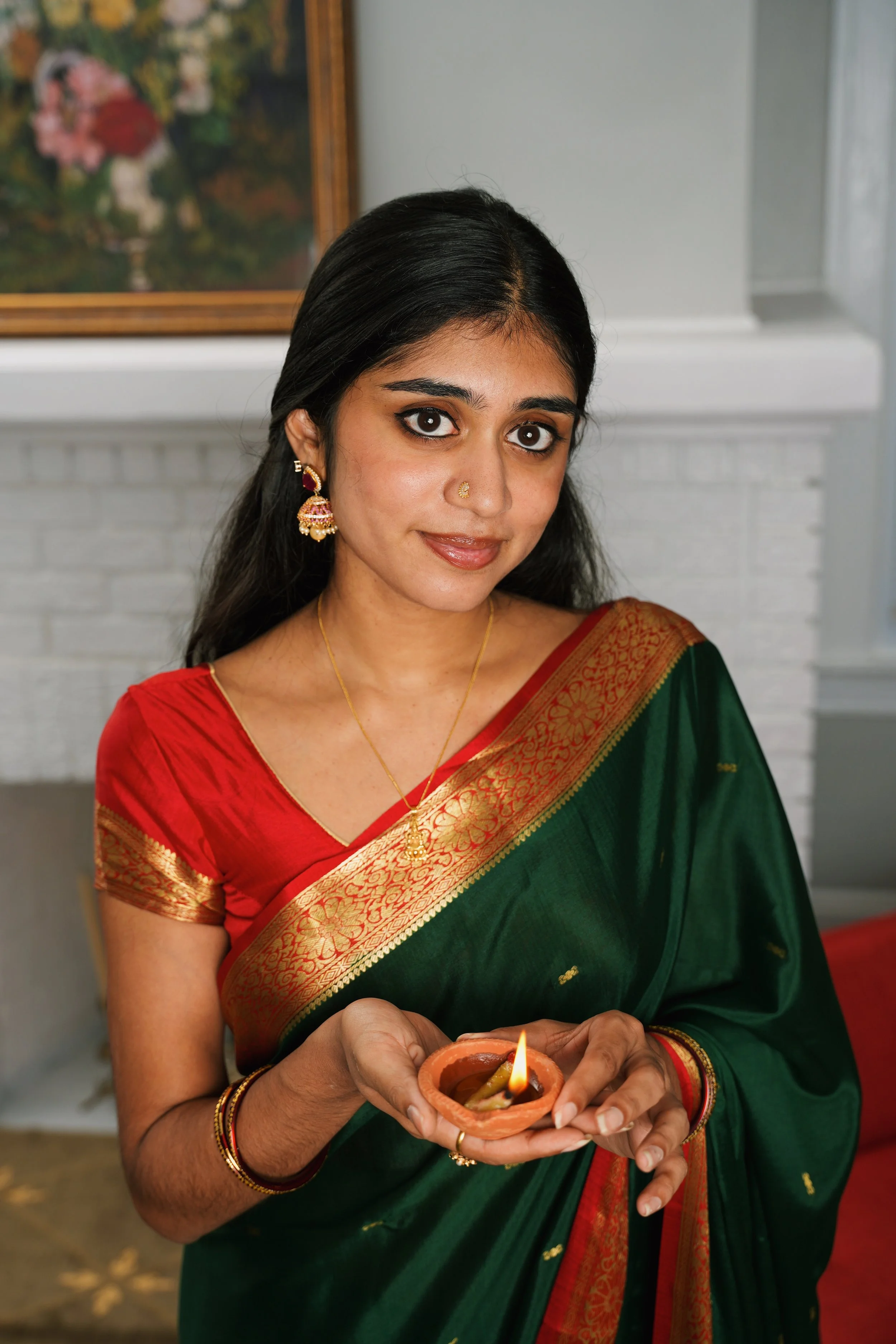
Shriie grew up in Northern Virginia as the oldest of three sisters. Her parents immigrated from Tamil Nadu, India, before she was born. With twelve years between Shriie and her youngest sister, she often took on the role of a third parent, helping bathe her, put her to sleep, and care for her from a young age.
Shriie grew up hearing that she should become a doctor, an expectation familiar to many children in immigrant families. But medicine did not become her own goal until the summer after her first year of college. She spent that summer working one-on-one with children with chronic medical needs at a camp affiliated with UVA Medical Center. Caring directly for those children made medicine feel tangible in a way it had not before.
Being the eldest daughter in an immigrant family also taught Shriie to distinguish other people’s expectations from her own. She learned relatively early that maintaining her independence sometimes required saying no, even when her family did not initially agree with her decisions. Rather than viewing that as rejection of her family, she came to see it as necessary to becoming her own person.
Shriie has known she was bisexual since high school. She never experienced a dramatic coming-out moment; over time, that identity simply became another integral part of who she was. Her relationship with queerness has also intersected with her Hindu faith. Growing up, much of what she knew about Hinduism came through the more conservative practice of her parents and community.
A college course on Hinduism complicated that understanding. It exposed her to interpretations of scripture that were far more fluid around gender and sexuality and introduced her to Shaktism, a goddess tradition that felt closely aligned with beliefs she already held. Rather than viewing her sexuality and religion as incompatible, Shriie found ways to understand both more expansively.
After college, Shriie spent two gap years working in cardiovascular research in Boston. Living on her own, earning her own money, and working full-time gave her a new sense of independence. It was also where her interests in South Asian health became more defined. Diabetes and cardiovascular disease were so common within her community that they could feel almost inevitable; research made her ask why.
Her lab was involved in efforts to create a biobank for South Asian Americans, a population that remains poorly represented in genetic research despite substantial cardiovascular risk. In medical school, her interests expanded further into women’s health, genetics, PCOS, and earlier identification of cardiovascular risk. She is still deciding exactly what her career will look like, but she knows the questions she wants to keep asking.
Q: What did living in Boston give you?
A: “It was my first time working full-time and not being in school, so all of that felt empowering. You make your own money. You’re on your own two feet. And I loved Boston. I still love Boston. I had really good friends there, so a large part of the experience was just being surrounded by the people that I love.”
Q: Why is reading important to you?
A: “I think it’s important for your worldview to be challenged. I think it’s important to not get comfortable with your worldview, and to engage with texts and pieces written by people you might disagree with and really give it a shot. I think there’s something to learn from everyone.”
Q: What does art give you outside of medicine?
A: “Something that I would like to do is continue being able to express myself artistically. I find that very grounding. I think it’s easy to not be grounded when you’re in medicine and just get caught up in the weeds of things and lose sight of what’s important. I think art, painting, and things help me remember.”
Q: What would you tell your younger self?
A: “You are not doing anything wrong by speaking up for what you believe in or speaking up for what you think you are owed. Just because you are younger and maybe adults are not able to see that, you need to trust in your own instincts. Just because they’re older doesn’t mean they know what’s better for you.”
Annabel
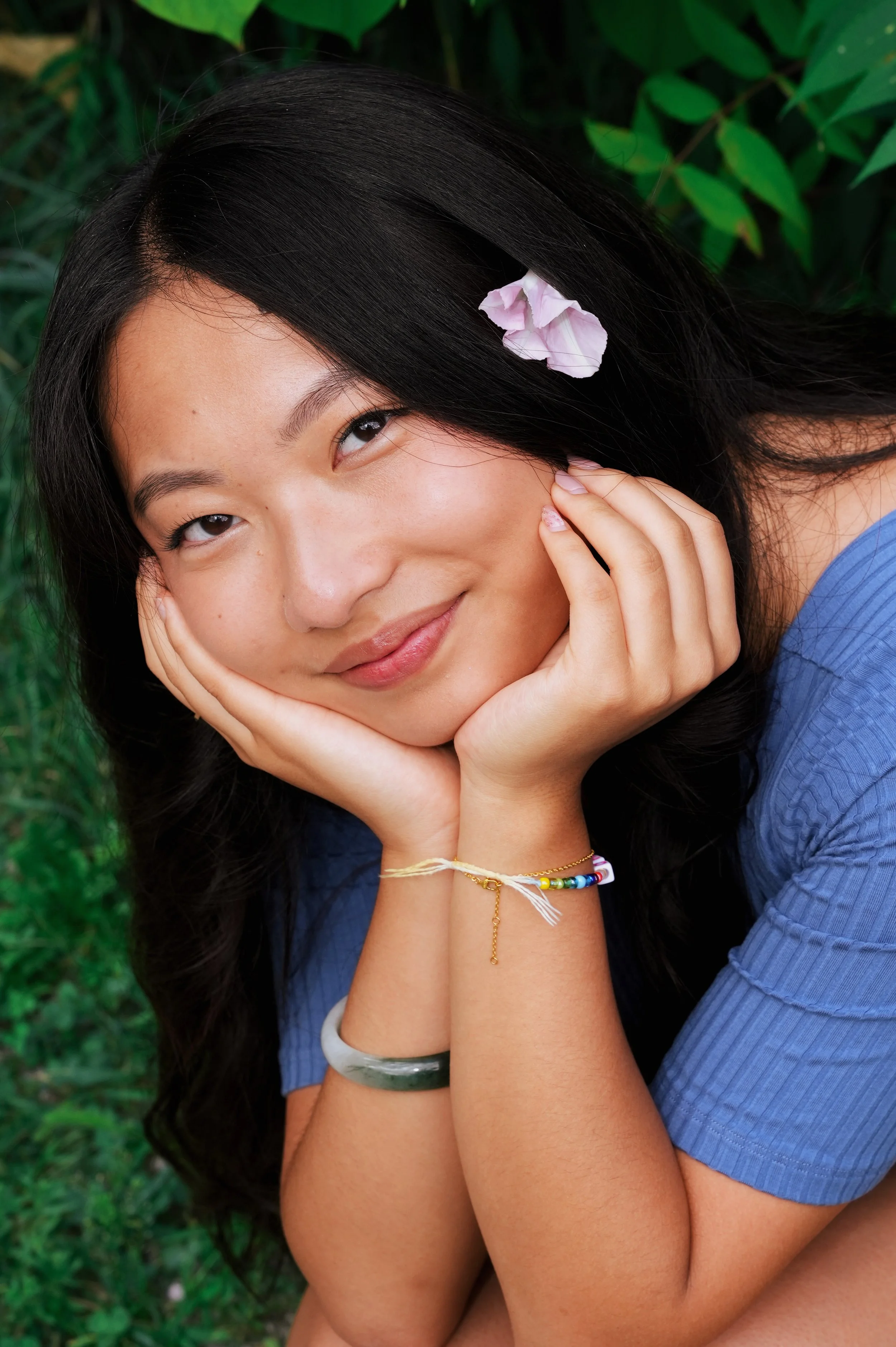
Annabel was born in Hawai‘i before her family moved to Pennsylvania and eventually Michigan, where she spent most of her childhood. She is the middle of three sisters and the daughter of immigrants from China. She later attended the University of Michigan, studying biology and statistics before coming to Cleveland for medical school. As she and her sisters have grown older, their relationships with one another, and with their parents, have changed with them.
Mental health was not something openly discussed in Annabel’s family growing up. As a teenager, however, she became increasingly aware of its importance through her own experiences and those of people around her. She became an early advocate for therapy among her family and friends, viewing it not only as something for moments of crisis but as routine maintenance. Over time, conversations that once felt foreign within her family became easier to have.
In 2021, Annabel’s mother was diagnosed with cancer. Annabel was a college student nearby and often accompanied her parents to appointments, sometimes finding herself translating complicated medical conversations despite not feeling fluent enough in Chinese to do so. “They’re immigrants, so their English isn’t very good, so I’m translating when my Chinese isn’t good either. I can barely speak one language, and then I’m being asked to do counseling in another language.”
The experience placed Annabel in an unfamiliar position. She was still someone’s daughter, but she was also becoming an advocate, translator, and source of support for the people who had always taken care of her. She began noticing how differently people within the same family could respond to illness, who wanted more information, who became afraid, who needed reassurance, and who preferred not to talk about what was happening at all.
Watching physicians navigate those differences changed the way Annabel viewed healthcare. She saw how much trust could depend on someone’s ability to read a room rather than simply deliver information. The physicians she admired were not only clinically capable; they knew how to make her parents feel safe during a period when very little felt predictable.
Medical school has given Annabel another chance to reconsider the roles within her family. Her sisters are adults now, her parents are getting older, and the people she once saw primarily as “mom,” “dad,” or “sister” have increasingly become people with insecurities, histories, and lives of their own. That shift has made her more patient with them and more conscious of the complexity every person brings with them into a hospital room.
Q: What did living in Boston give you?
A: “It was my first time working full-time and not being in school, so all of that felt empowering. You make your own money. You’re on your own two feet. And I loved Boston. I still love Boston. I had really good friends there, so a large part of the experience was just being surrounded by the people that I love.”
Q: Why is reading important to you?
A: “I think it’s important for your worldview to be challenged. I think it’s important to not get comfortable with your worldview, and to engage with texts and pieces written by people you might disagree with and really give it a shot. I think there’s something to learn from everyone.”
Q: What does art give you outside of medicine?
A: “Something that I would like to do is continue being able to express myself artistically. I find that very grounding. I think it’s easy to not be grounded when you’re in medicine and just get caught up in the weeds of things and lose sight of what’s important. I think art, painting, and things help me remember.”
Q: What would you tell your younger self?
A: “You are not doing anything wrong by speaking up for what you believe in or speaking up for what you think you are owed. Just because you are younger and maybe adults are not able to see that, you need to trust in your own instincts. Just because they’re older doesn’t mean they know what’s better for you.”
Sonny
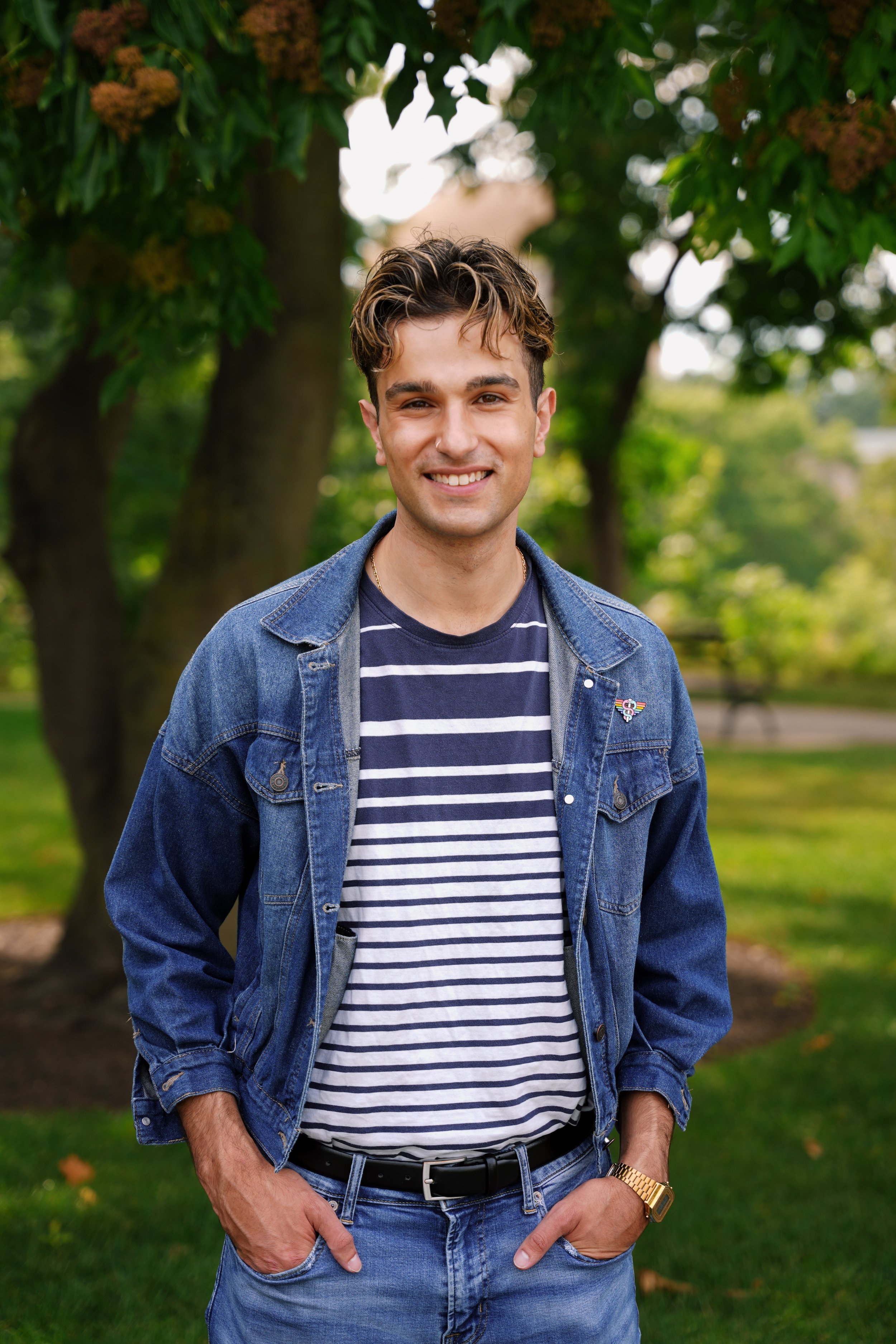
Sonny grew up near Columbus, Ohio, as the oldest of three children. Although he was generally healthy, his younger siblings had several significant medical problems. His sister was born with a congenital heart defect and later experienced appendicitis complicated by sepsis, while his brother developed Crohn’s disease. Illness was therefore something Sonny encountered through the people he loved rather than through his own body.
As the oldest sibling, he sometimes found himself stepping into a caregiving role. At the same time, he became curious about what was happening physiologically—why these illnesses occurred, how they were treated, and what could be done differently. That combination of caretaking and curiosity would eventually push him toward both research and medicine.
Sonny studied neuroscience at Ohio State but initially felt disconnected from the traditional pre-med path. He knew that he loved science, research, and the brain, but he was less certain that he fit his image of the kind of person who became a physician. Medicine felt populated by a type of student he did not necessarily recognize himself in.
That changed after college, when Sonny moved to New York and worked at Rockefeller University. For the first time, he met MD/PhD students and faculty who showed him that research and patient care did not have to be separate careers. He also worked in the emergency department at Weill Cornell, giving him direct exposure to patients and ultimately helping him decide to pursue an MD/PhD himself.
New environments also gave Sonny more room to understand his queer identity. Growing up in a relatively sheltered community had made him anxious about how being gay might affect his future. Leaving home exposed him to openly queer adults and communities that made a life in science and medicine feel more imaginable.
His identity has since made him especially attentive to small details that can make patients feel recognized. While working in the emergency department, for example, he cared for a teenager in crisis who emphasized the importance of their they/them pronouns. In a chaotic environment where information could easily be lost, Sonny made a point of communicating that detail to everyone involved in the patient’s care.
After years of working toward long-term academic goals, Sonny has also become more aware of the importance of everything happening outside them. Friends, family, hobbies, and time away from medicine are not distractions from the finish line; they are part of what makes reaching it sustainable.
Q: What does family look like to you now?
A: “I have my family of friends and my community of people in Cleveland, chosen family, which extends all over the place from everywhere that I’ve been. Now it’s branched out throughout the world.”
Q: Did you have a queer role model in science?
A: “I had a professor at Ohio State who had a wife, and I thought that was really great to know. I was very concerned about what it was gonna be like going into this field because, in academia, there are a lot of old hats. I remember talking to her about what it would be like if I went into science like this—are people open? She was very reassuring to me. She talked about how much science was changing and how she had always been able to bring her wife to events and talk about her openly. That really helped reassure me.”
Q: How do you keep medicine from becoming your entire life?
A: “The finish line is there, so I’m just running towards it. I’m motivated to get there. But there are times where it gets tough and you feel like you need to step away, and I think that’s important. Focusing on the things in life that make you happy, your friends, your family, the fun things you like to do, hobbies and whatnot. I think it’s balancing that with getting to the end goals.”
Q: What would you tell your younger self?
A: “Literally just act yourself. Act normal. Don’t be worried. People are not gonna care. If they do care, they’re the weird one. You’re fine.”